—————
Six sigma
————–
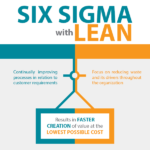
Six Sigma in many organizations simply means a measure of quality that strives for near perfection. Six Sigma is a disciplined, data-driven approach and methodology for eliminating defects (driving towards six standard deviations between the mean and the nearest specification limit) in any process — from manufacturing to transactional and from product to service. Several organizations also employ Six Sigma as a leadership development methodology requiring identified potential future leaders to learn the Six Sigma tools and methodology, make data-based decisions, and lead projects that deliver financial results to the bottom line.
————————————
Six sigma and statistics
————————————
The statistical representation of Six Sigma describes quantitatively how a process is performing. Six Sigma quality is defined as a process producing at a defect rate of 3.4 parts per million or less. A defect is defined as anything outside of customer specifications. A Six Sigma opportunity is the total quantity of chances for a defect, which is significantly impacted by process and product complexity.
——————–
The objective
——————–
The fundamental objective of the Six Sigma methodology is the implementation of a measurement-based strategy that focuses on process improvement and variation reduction through the application of Six Sigma improvement projects. The Six Sigma DMAIC process (define, measure, analyze, improve, control) is an improvement system for existing processes. Design for Six Sigma is an improvement system used to develop new processes or products at Six Sigma quality levels. Six Sigma and DFSS processes are executed by Six Sigma Green Belts and Six Sigma Black Belts, and are overseen by Six Sigma Master Black Belts